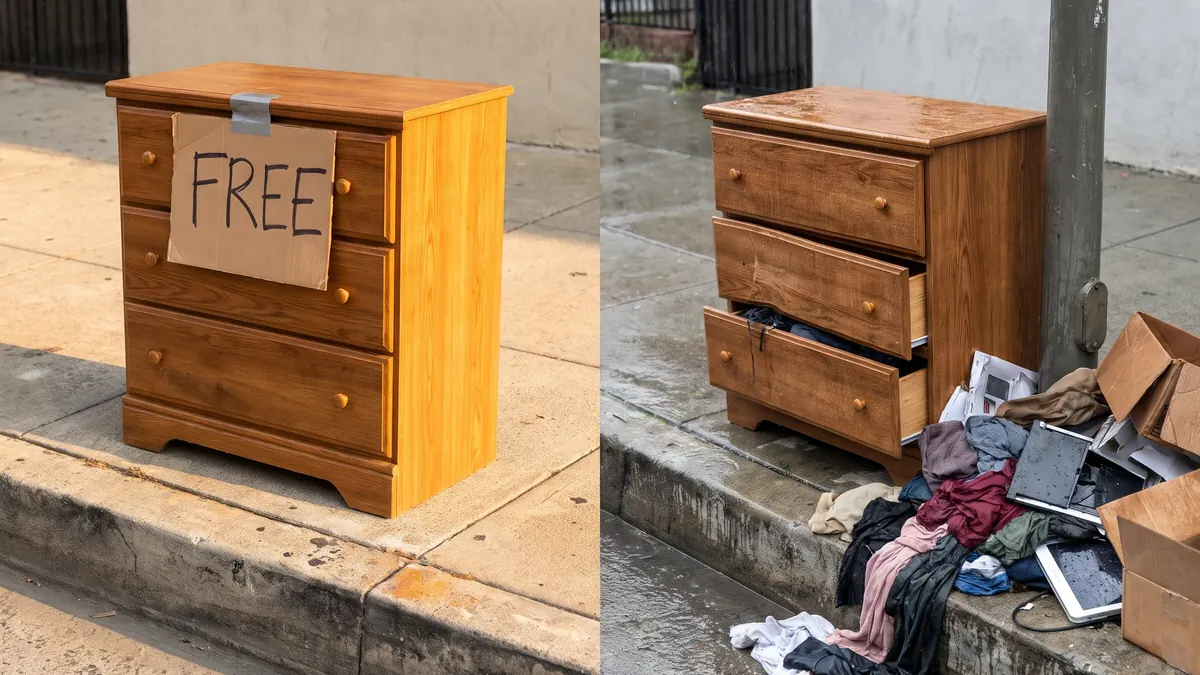
Sooner or later, everyone has a piece of furniture that's too big for the trash can. Most cities have a system for this, usually called bulk trash, bulky item pickup or heavy trash. The basic idea is the same everywhere: you set large items at the curb and the city or its hauler takes them away. The details are where people get tripped up.
The two main systems
US cities generally handle bulky items in one of two ways.
- Scheduled, by request. You contact the city, usually through 311, an app or a website, and book a pickup. Items go out the night before or the morning of your appointment. Many large cities work this way.
- Set days or seasons. The city collects bulky items on a fixed schedule for each neighborhood, such as once a month, or runs a spring or fall cleanup week. You put items out during your window.
Some cities include a few pickups a year in your regular trash service at no extra cost. Others charge a fee, limit the number of items or only serve single-family homes and small buildings. Apartment complexes often have their own arrangement through the property manager.
What cities usually won't take
Rules vary, but these are commonly excluded from regular bulky pickup:
- Construction and remodeling debris, like drywall, tile and lumber.
- Paint, chemicals, motor oil and other hazardous waste.
- Tires and car batteries.
- Electronics in some places, which may need a separate e-waste drop-off.
- Appliances with refrigerant, like fridges and AC units, which often need special handling.
Always check your city's page before you set anything out. Items that don't meet the rules can be left behind, and in some places you can be fined for putting things out on the wrong day.
How to find your city's rules
Search for your city name plus "bulky item pickup" and look for a result on the official city or county website, usually ending in .gov. Calling 311 also works in most large cities. If you live in one of the cities we cover, our city pages include local notes on bulky pickup and donation options.
Why you should post it as free first
Here's the thing about bulk trash day: a lot of what goes out is perfectly usable. Bookshelves, dressers, desks, dining chairs and couches with years of life left get crushed in a truck because nobody knew they were there.
Posting the item as free a day or two before your pickup changes that. Neighbors who need a dresser can come get it, and you only put out for the city what's left. It costs you a photo and a minute. On CurbSofa, snap a picture, drop a pin where you've set it out and nearby people see it on the map. Everything is free and first come, first served.
A simple routine:
- Two days before: post the usable items as free and set them out in daylight, or note they can be picked up by arrangement.
- The evening before pickup: mark anything that was taken as gone, and put the remaining items out according to your city's rules.
- Pickup day: the city takes what's left.
Be clear about what's free and what's trash
If you mix giveaways and real junk at the curb, people can't tell what's what. Keep them apart, or add a simple FREE sign to the items you're giving away. And never leave broken or unsafe items out as a giveaway. A recliner with a broken mechanism or a crib that doesn't meet current safety standards should go to the city, not to a neighbor.
The bottom line
Bulky pickup is a useful service, and it's the right place for things nobody can use. But it works best as the last step. Give first, then schedule the truck for what's left.
Frequently asked questions
Is bulk trash pickup free?
It depends on the city. Many large cities include free bulky item pickup with regular trash service, sometimes with a limit on items or pickups per year. Others charge a fee. Check your city's official website or call 311.
Can I put furniture on the curb any day?
Usually not. Most cities only allow bulky items at the curb on your scheduled pickup day or the night before. Putting items out on the wrong day can lead to a fine in some places.
What should I do before bulk trash day?
Post usable furniture as free a day or two before so a neighbor can take it, then put out only what's left for the city to collect.