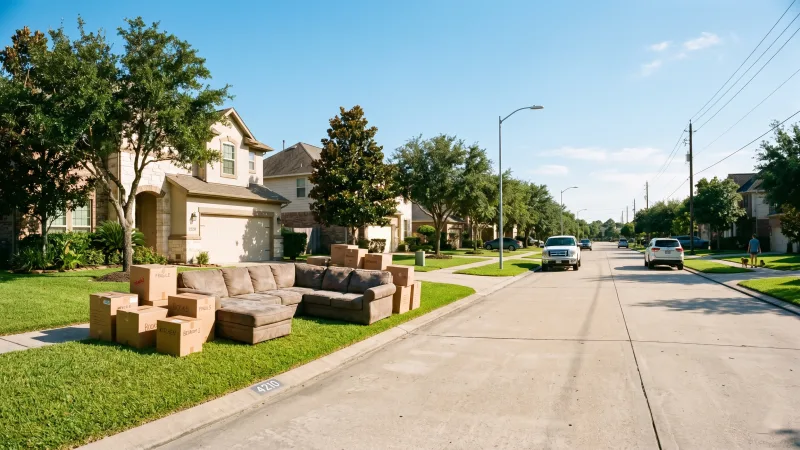
I have taken some genuinely terrible photos of good furniture. There was a solid oak bookshelf I put out two springs ago — heavy, no wobble, the kind of thing that costs real money — and I shot it at 9pm under my porch light. The photo looked like a crime scene. It sat for two days. Then it rained, the veneer on the top shelf bubbled, and I carried a swollen, ruined bookshelf back to the alley myself. That one's on me. Not the shelf's fault. The photo's.
Here's the thing nobody tells you when you post something free: the item isn't competing on quality. It's competing on the photo. Somebody scrolling the map on their lunch break decides in about half a second whether your thing is worth the walk. A great piece with a dark, cluttered, flash-blown photo reads as junk. A pretty ordinary chair with one clean, honest shot gets three messages before you've finished your coffee.
Shoot it in daylight. Just do that one thing.
If you take nothing else from this, take this: photograph it outside, in the daytime, and you're most of the way there. Overhead light and camera flash both do the same ugly thing — they flatten wood grain into a smear and turn fabric a weird gray. Daylight shows the actual color and the actual texture. People trust what they can see.
The sweet spot is a bright but overcast day, or the shade on a sunny one. Direct noon sun is almost as bad as flash — it blows out the highlights and drops hard black shadows across everything. Early evening, that hour before sunset, is honestly gorgeous for wood. If it's already dark and you're impatient, wait until morning. I know. But the couch will still be there, and the photo will be ten times better, and you'll have it claimed by lunch instead of watching it get rained on.
One hero shot from a normal human angle
You need one photo that does the heavy lifting. Stand back far enough to get the whole piece in frame with a little breathing room around it. Crouch a bit so the camera is roughly at the item's own mid-height — not looming down at it from your full standing height, which makes everything look small and sad and slightly ashamed of itself.
Shoot it at a slight three-quarter angle rather than dead flat from the front. A chair photographed straight-on is a silhouette; the same chair turned so you can see the front and one side at once suddenly has legs, depth, a shape. That's the difference between "a chair" and "oh, that chair."
And clear the junk out of the frame first. Move the garbage cans. Kick the stray takeout container out of the shot. Nudge the item a few feet from the recycling bins if you can. Nobody wants to feel like they're picking through your trash, even when, technically, that is exactly what's happening.
Show scale, because "medium" means nothing
The single most common message I get on curb finds is some version of "wait, how big is it?" A dresser floating alone against a fence could be a nightstand or a wardrobe. Give people an anchor.
The easy trick: include something everyone knows the size of. Your doorway. A standard front step. A folding chair next to it. Your own hand or foot in the shot for small stuff. I once photographed a little side table with my dog sitting next to it and it was gone in fifteen minutes — half because of the table, half, I suspect, because of the dog. Either way, people knew it would fit in a Corolla.
If you want to be a hero, add the actual dimensions in your post text. "Roughly 3 ft wide, fits through a standard door." That one sentence saves you five back-and-forth messages and saves them a wasted trip.
Show the flaws. On purpose.
This feels backwards and it's the most important habit to build. If there's a water ring, a torn cushion seam, a wobbly leg, a cat-scratched arm — take a clear photo of it and post it right alongside the pretty one.
Two reasons. First, it builds instant trust. A listing that shows the scuff reads as honest, which makes people believe the rest of the photos too. A listing with only glamour shots makes people assume you're hiding something. Second, and more practical: the person who shows up should already know what they're getting. Nothing kills a curb handoff faster than someone arriving, spotting a stain you didn't mention, and leaving — while three other people who'd have happily taken it have already moved on. You didn't do anyone a favor by hiding the flaw. You just wasted two people's afternoons and left the thing on the curb longer.
So for anything with real wear, shoot a second, closer detail photo. The worn spot, the maker's mark on the back, the joint, whatever tells the story. It's not a flaw shot, exactly. It's a "here's what you're actually getting" shot, and honest listings move faster.
Wipe it down before you shoot
Five minutes with a damp rag changes everything. Dust turns a rich walnut into a dull gray in a photo — the camera reads the film of dust, not the wood under it. A cushion that's been in a basement looks dingy until you lint-roll it and it photographs like new. You're not deep-cleaning; you're just letting the good stuff underneath show up on camera.
This goes double for anything upholstered or anything that's been in storage. Give it a wipe, a quick vacuum, flip the cushions to the good side, then shoot. The piece hasn't changed. What it looks like online has, completely.
A tale of two dressers
Two real ones from my building. Same week, oddly. Neighbor A put out a beat-up IKEA Malm, three drawers, one runner busted. She shot it in daylight, three-quarter angle, a wide photo plus one close-up of the broken drawer with a caption that said so. Honest, clear. Gone in about forty minutes to someone who wanted it for a garage and didn't care about the drawer.
Neighbor B put out a genuinely lovely mid-century teak dresser — the kind people pay a couple hundred bucks for. He shot it at night, from above, one dark blurry photo, half a garbage bag in the corner of the frame. It sat for three days. It rained Thursday. By the weekend the top had lifted at the seam and someone finally hauled it away for scrap. A beautiful piece, killed by a bad photo and a little impatience.
The lesson isn't complicated. The better item lost because the worse item had the better picture. That's the whole game.
So next time you drag something to the curb, give it the two minutes it deserves. Wipe it down, wait for decent light, shoot one clean wide shot and one honest detail, note the size, and put it on the map. A good piece deserves better than rotting in the rain because you were tired at 9pm. Trust me. I've carried the swollen bookshelf back up the stairs. You don't want to.