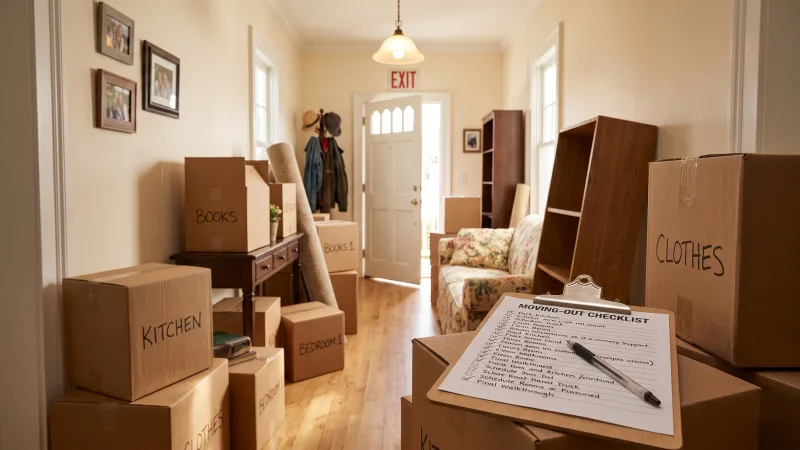
The night I moved into my first apartment, I owned a mattress, two suitcases, and a folding chair. I remember sitting on the floor eating noodles off a cardboard box and thinking I would need months of savings before the place felt like a home. I was wrong. Within six weeks, nearly every room was furnished, and my total spending on furniture was zero dollars. Not cheap — zero.
What made it work was not luck. It was treating the empty apartment as a project with a plan, instead of a series of impulse grabs. Free furniture rewards patience and punishes panic. So before we go room by room, let me give you the ground rules that make the whole thing succeed.
Start with a Plan, Not a Pile
First, make two lists: essential (things you need to sleep, eat, and work) and eventual (everything else). Your essentials list is probably shorter than you think — a bed, one comfortable seat, a table you can eat and work at, and light. Everything else is an upgrade you can wait for.
Second, measure your rooms and doorways once, write the numbers in a note on your phone, and never delete it. The most common beginner mistake is grabbing a beautiful free sofa that does not fit through the front door or eats the entire living room.
Third, set up your search before you need it. Browse CurbSofa daily for the first few weeks — new listings move fast, and the best pieces go to whoever sees them first. Consistency beats intensity here: five minutes every morning outperforms a frantic weekend hunt.
The Living Room: Where Patience Pays Most
Living rooms are where the best free furniture lives, because sofas, coffee tables, and shelves are exactly the pieces people cannot easily take when they move.
- The sofa. This is your big-ticket rescue, and it deserves a real inspection — check seams and undersides for pests, smell for mustiness, and sit down hard on every cushion to test the frame. A dated-but-solid sofa under a throw blanket beats a stylish one with a cracked frame every time.
- The coffee table. One of the most common curbside items in existence. Hold out for solid wood if you can; scratches sand out, and even a rough one can be revived with an hour of work.
- Bookshelves. Skip anything with swollen, water-damaged particle board edges. Solid or laminate shelves in good condition are everywhere if you wait two weeks.
- Lamps. Free lamps are abundant, but check the cord along its whole length — cracked or brittle insulation is a pass unless you know how to rewire (a genuinely easy skill, but learn it before you need it).
The Bedroom: One Big Exception
Here is the one place I will tell you to spend actual money: buy your mattress new (or at minimum from a source you completely trust). A curbside mattress carries pest and hygiene risks that no inspection can fully rule out, and you will spend a third of your life on it. It is the single best furniture purchase you can make — and going free on everything else is exactly what makes room in the budget for it.
Everything around the mattress, though, is fair game:
- Bed frames disassemble for transport and are easy to inspect — check the rails and center support for cracks.
- Dressers are the crown jewels of curbside furniture. Test every drawer; a dresser whose drawers glide is a keeper even if the finish is rough. Anchor tall ones to the wall.
- Nightstands are so common that you can afford to be picky. Wait for one you actually like.
The Kitchen and Dining Area
Dining sets are among the most frequently given away items anywhere, because they are heavy, bulky, and rarely survive a move. Your moves here:
- Take the table, skip the matching obsession. A solid table with mismatched chairs looks intentional; four chairs that all wobble look like a problem. Test every chair by rocking it side to side with a hand on the seat back.
- Microwave carts and kitchen islands add counter space that first apartments never have enough of.
- Small appliances deserve caution. If a Giver on CurbSofa says a toaster or microwave works, great — ask, and test it as soon as you can. But avoid anything with frayed cords, rust inside, or a burning smell, and be choosy in a way you do not need to be with a wooden chair.
The Workspace
Desks and office chairs flow onto curbs constantly. A few honest notes from experience: office chairs are worth grabbing if the gas cylinder still holds height and the upholstery passes the same inspection you would give a sofa. And if you cannot find a desk you like, the classic move still works — a solid-core door or a large table top across two small filing cabinets makes a desk with more surface area than most things you could buy.
Pro Tip: When you claim a piece, take fifteen seconds to ask the Giver one question: 'Anything I should know about it?' People are remarkably honest when they are giving something away for free — they will volunteer the wobbly leg, the drawer that sticks, or the fact that it lived in a smoke-free home. That one question has saved me more trips than any other habit.
What to Skip Entirely
For completeness, my do-not-take list for a first apartment: mattresses and box springs, cribs and other child-safety items (safety standards and recalls make history matter), upholstered pieces with any musty smell or pest evidence, and particle board that has been rained on. There is enough good free furniture in the world that you never need to gamble.
Making Mismatched Feel Intentional
The finished apartment will not look like a showroom, and that is fine — showrooms are boring. But a few cheap moves pull a scavenged room together: a single consistent accent color repeated in textiles, matching hardware swapped onto mismatched drawers, and one coat of paint on the piece that clashes most. The goal is a home that looks collected, not assembled, and honestly, collected is exactly what it is. Every piece in my living room has a story that starts with 'someone up the street was giving this away,' and I would not trade that for matching anything.