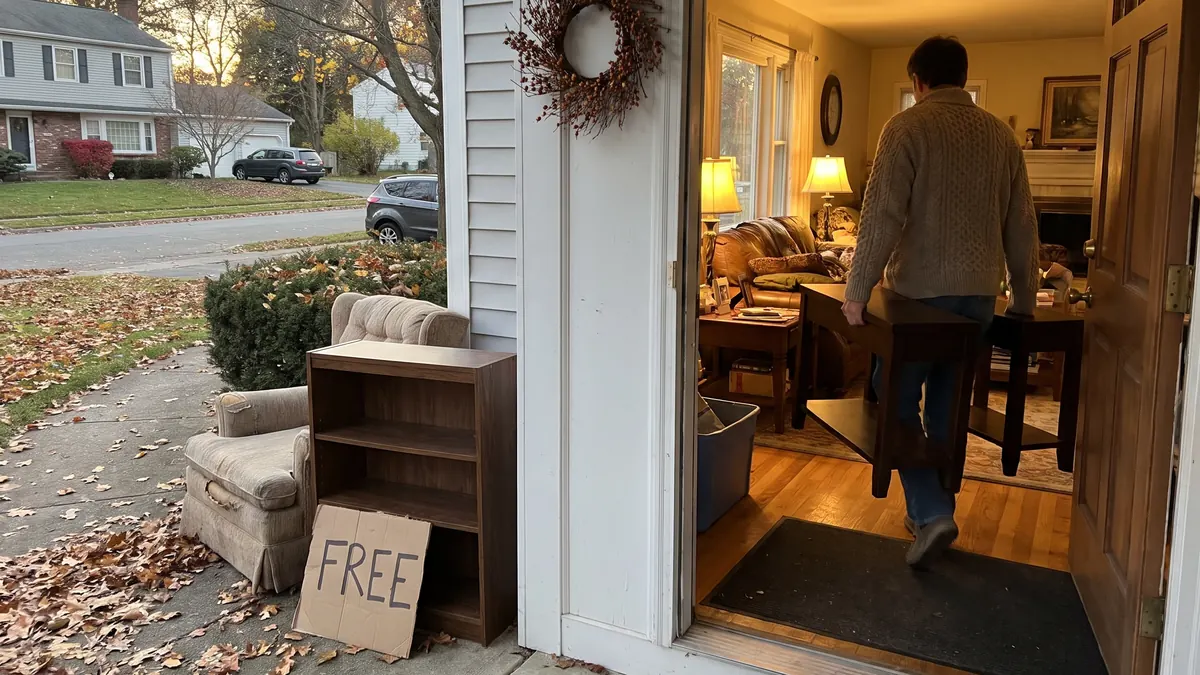
Every year it's the same: the guest room has turned into storage, there's an extra armchair nobody sits in, and the hallway closet won't close. Then someone says they're coming for Thanksgiving, and suddenly all of it has to go.
Most of that stuff still works. It doesn't need a landfill. It needs a neighbor who wants it. Giving it away on the curb is free, takes far less time than a donation drop-off, and usually clears the item within a day or two if you do it right. Thanksgiving is on November 26 this year, so here's a plan that starts now.
Three weeks out: decide what goes
Walk through the rooms your guests will actually use: the guest room, the living room, the dining area, and the entryway. For each piece, ask one question. Did anyone use this in the last year? If the answer is no, it's a candidate.
The things that move fastest on the curb are the ones people need right away:
- Small tables and nightstands. Easy to carry, useful everywhere.
- Dining and desk chairs. Especially in sets. Keep matching chairs together.
- Bookshelves and dressers. Solid wood goes in hours, particleboard a bit slower.
- Lamps, mirrors and rugs. Quick grabs for people furnishing a first place.
- Kitchen gear. Pots, mixers and serving dishes are in demand right before holiday cooking.
- Kids' toys and bikes. Families make room for new gifts, too.
If you're replacing a TV or a couch during holiday sales, plan the old one's exit now so it isn't sitting in the garage until spring.
What not to put on the curb
Free doesn't mean anything goes. Skip items that are broken beyond a quick fix, anything with mold, stains or a smell, mattresses and upholstered pieces that might have pests, and anything hazardous like paint, propane or old batteries. Those belong with your city's bulky-item or hazardous waste service, not on the sidewalk.
Rules about leaving items at the curb vary by city, and some places have specific bulky-item pickup programs. A quick check of your city's sanitation page before you set anything out saves you a warning notice.
Two weeks out: post it so it's gone in a day
The difference between an item that disappears in two hours and one that sits for a week is almost always the post, not the item. A few habits that help:
- Photograph it in daylight, straight on, with the whole piece in frame. Add a second photo of any wear so nobody is surprised.
- Give rough dimensions. "Fits in a hatchback" or "needs two people" answers the first question every Finder has.
- Put it out in the morning, ideally on a dry day, and post as soon as it's on the curb.
- Weekends move fastest. More people are home with a car and time to stop by.
On CurbSofa you can post an item with a photo and its location in under a minute, and it shows up on the map for people nearby. It's first come, first served, so you don't have to answer messages or hold anything for anyone. If you'd rather do it from your phone while you're standing at the curb, the CurbSofa Android app works the same way.
One week out: watch the weather and close the loop
November weather is the enemy of upholstered furniture. If rain is coming, wait, or cover the piece with a tarp and say so in the post. A soaked couch becomes trash the moment it gets wet, and nobody will take it.
Once something is picked up, mark it as gone. It saves the next person a wasted drive and keeps your neighborhood's listings trustworthy. If an item hasn't moved after a couple of days, bring it back in, refresh the photo, and try again on a weekend morning. If it still doesn't go, that's your sign it belongs with a donation center or bulky-item pickup.
Be the neighbor people are glad to have
Keep the sidewalk clear so strollers and wheelchairs can get by. Put small items in a box rather than scattering them. Add a simple "FREE" sign so nobody wonders whether they're allowed to take it. And don't leave a pile behind: anything still there after a few days is your responsibility, not the street's.
Do it this way and the guest room is ready, the hallway closet closes, and a family down the street gets a dresser they needed. That's a better holiday story than a trip to the dump.
Frequently asked questions
How early should I start clearing out before Thanksgiving guests arrive?
About three weeks ahead is comfortable. That gives you one week to decide what goes, a week or two to give items away, and a buffer for rainy days or pieces that take longer to find a new home.
Is it legal to leave free furniture on the curb?
It depends on your city. Many places allow it as long as the sidewalk stays clear and items are taken back if no one claims them, while some have specific bulky-item rules. Check your city's sanitation page before you set things out.
What if nobody takes my item?
Bring it back in after a couple of days, take a better daylight photo, and post it again on a weekend morning. If it still doesn't move, use a donation center or your city's bulky-item pickup instead of leaving it out.