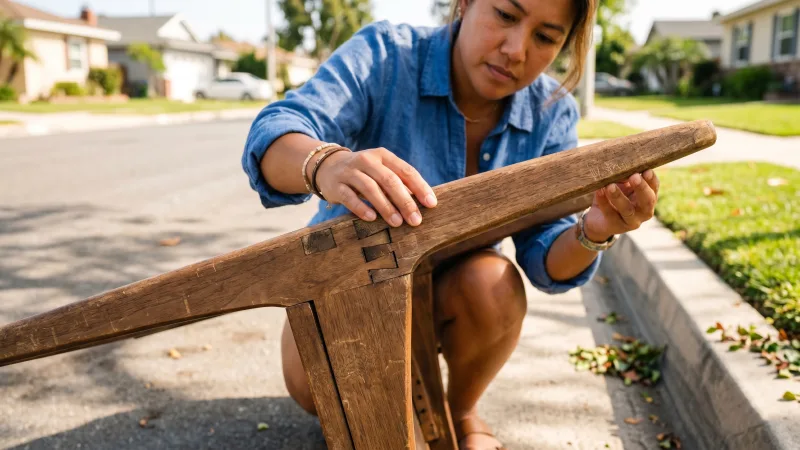
It was a dresser. 1980s laminate, fake wood finish, brass pulls shaped like little flowers. Sitting on a curb in the Richmond with a rain forecast and a FREE sign that looked two days old.
I almost kept walking. I did not. Three weekends later it was painted terracotta with matte black pulls, and three people at a dinner party asked where I bought it. Here are the seven projects that have worked for me.
Why Curbside + DIY Is Such a Strong Combination
When you buy furniture to upcycle, you're paying twice: once for the item, once for the supplies. When the item is free, you're only paying for the supplies — which for most projects is between $20 and $60. The risk calculus is completely different. If it doesn't work out, you're out $30 and some time. If it does, you have a custom piece of furniture that cost essentially nothing.
Start with items that are structurally sound but aesthetically outdated or superficially damaged. Solid bones, bad finish — that's the sweet spot.
1. Sand and Repaint a Dresser
The most common curbside upcycle. An old wood dresser with scratches and outdated color becomes a statement piece with sandpaper, primer, and a quart of paint. Total cost: $35–$50. Time: one weekend. Use chalk paint for a matte finish that doesn't require sanding — it adheres to almost anything.
2. Replace Drawer Hardware
Old hardware is often what makes a piece look dated. Swap out brass pulls for matte black, ceramic, or leather loops and a 1970s dresser looks suddenly contemporary. Hardware costs $2–$8 per pull — usually 6–8 pulls per dresser. Total cost: $15–$60. Takes 20 minutes.
3. Refinish a Wood Table
A scratched or stained wood dining table is one of the most valuable curbside finds. Sand the surface starting with 80-grit, work up to 220-grit, then apply stain and polyurethane. Total cost: $40–$70 in supplies. Result: a table worth $200–$800 at any furniture store.
Tool Tip: A random orbital sander (about $40 at Home Depot, also available at most tool libraries for free) will save you hours compared to hand sanding. If you're doing more than one project, it pays for itself immediately.
4. Reupholster a Chair Seat
A dining chair with a worn seat pad is completely fixable. Remove the seat cushion (usually 4 screws from underneath), cut new fabric, staple it on with a $15 staple gun. No sewing required. New fabric costs $10–$20 per yard. One yard handles 2–3 chair seats.
5. Add Casters to a Coffee Table
A solid coffee table that's seen better days gets a completely new look with hairpin legs or locking casters. Screw-in casters are $15 for a set of four. Hairpin legs are $30–$60 but transform the piece. Combine with paint or stain for a complete refresh.
6. Turn a Dresser Into a TV Stand
A low, wide dresser makes an excellent TV stand. Cut a hole in the back panel for cord management (a jigsaw or even a utility knife works for thin backs), add a fresh coat of paint, and you have custom media storage that would retail for $300+.
7. Build a Bookshelf Into a Room Divider
Two identical bookshelves placed back to back and secured with L-brackets create a freestanding room divider. Add wheels for mobility. This is a popular apartment hack for studio spaces — and with two shelves from CurbSofa, the lumber for a plywood backing, and some paint, it costs less than $50 total.
Curbside finds are raw material. They don't have to be perfect — they have to be solid. With basic tools and a weekend, you can turn someone else's discarded furniture into something that looks like it came from a boutique store. The only thing stopping you is the Saturday afternoon.