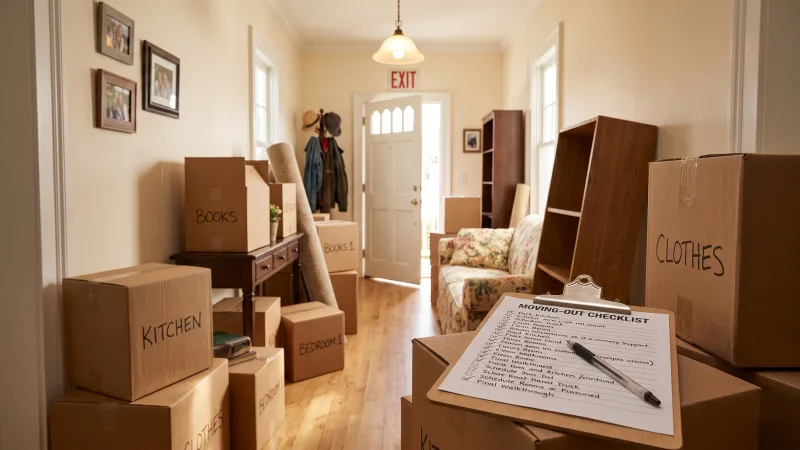
Renting comes with a specific kind of design puzzle: you cannot paint the walls, patch a nail hole without a fight over the deposit, or swap out that landlord-special light fixture without putting the ugly one back before you move out. Add a tight budget and a collection of furniture that arrived from three different curbsides at three different times, and it is easy to end up with a room that looks like storage rather than a home. None of that is actually a design failure waiting to happen. It is a constraint, and constraints are exactly what good design is for.
Start With What the Lease Will Not Let You Touch
Before buying a single command strip, walk the space and make a short list of what is fixed: wall color, flooring, light fixtures, cabinet hardware, blinds. Everything on that list needs a workaround rather than a fight. Command hooks and strips rated for the actual weight of what you are hanging (check the rating, not just the size) handle most wall-mounted needs without a single hole. Tension rods do the work of curtain rods in doorways and alcoves without brackets. Peel-and-stick options exist for shelf liner, and even for a small accent wall, and they come off clean if you follow the removal instructions rather than yanking them.
The goal is not to disguise that you are renting. It is to stop the fixed elements from dictating the whole room. A rental with beige walls and worn linoleum can still feel intentional if the things you control, textiles, furniture placement, lighting, are doing real work.
Small Spaces Reward Editing, Not Cramming
A studio or a shared apartment bedroom does not need less furniture so much as it needs furniture chosen for more than one job. A curbside coffee table with hidden storage does double duty as a place to sit and a place to stash things that would otherwise clutter a shelf. A low dresser can double as a TV stand or a plant ledge if you do not already have a dedicated spot for either. Before adding anything new to a small room, ask what it replaces, not just what it adds; a small space filled with five single-purpose pieces reads as cluttered even if each piece individually looks fine.
Vertical space is usually underused in small rentals. A tall, narrow bookshelf takes up the same floor footprint as a low one but holds far more, and it draws the eye upward, which makes a room feel larger than it is. If a curbside find is bulky but low, consider whether it actually earns its floor space compared to something taller and narrower doing the same job. Corners are worth a second look too; a slim curbside shelf angled into an unused corner can hold plants, books, or a lamp without ever crowding the walking path through the room.
Making Mismatched Pieces Look Like a Choice
Furniture gathered piece by piece from different curbsides rarely shares a wood tone, a style era, or even a general vibe, and that is fine. Consistency does not have to come from the furniture matching each other; it can come from something else in the room tying them together instead.
- Pick one unifying color and repeat it in small doses — a cushion, a lamp shade, a vase — across pieces that otherwise share nothing in common.
- Group by finish, not by style. A 1970s wood dresser and a modern wood side table can sit in the same room comfortably if both are warm-toned wood, even if their shapes have nothing to do with each other.
- Let one piece be the obvious anchor and treat everything else as supporting. A striking curbside armchair can carry a room even if the coffee table next to it is a completely different era, as long as it is clearly the piece you built the seating area around.
- Use textiles to blur the seams. A throw blanket draped over a mismatched chair, or a rug underneath the whole seating area, visually ties disparate pieces into one grouping rather than a row of unrelated objects.
The instinct to hold out for a matching set is understandable but usually a trap in a curbside-furnished home, since matching sets rarely appear on the same day in the same neighborhood. A room built around a color and a few repeated textures reads as curated. A room where every piece is waiting to be replaced by its "real" matching counterpart reads as unfinished, even when nothing is actually wrong with it.
Pro Tip: Swap out only the hardware on a curbside dresser or cabinet, not the whole piece, if the finish and shape are already fine but the knobs feel dated. New pulls are inexpensive, take ten minutes with a screwdriver, and are one of the few genuinely reversible upgrades: keep the old hardware in a labeled bag so the original set goes right back on before you move out.
Reversible Fixes That Actually Change a Room
A few small, fully reversible projects tend to do more visual work per hour spent than anything else available to a renter. A coat of chalk paint or a wood-appropriate paint on a curbside dresser changes its entire character without touching anything the landlord owns, since the piece itself is yours. Adding a fresh finish or oil to unfinished or dull curbside wood restores warmth without a full refinish. Slipcovers, even simple fitted ones, unify an odd assortment of secondhand seating into something that reads as a set. None of these require permission, because none of them touch the unit itself, only the furniture inside it.
Lighting is worth special attention in a rental, since the fixed overhead fixture is rarely flattering and almost never replaceable without reversing the swap later. A curbside floor lamp or table lamp with a warmer bulb does more to change a room's mood in one evening than almost anything else on this list, and it is entirely portable to the next apartment.
Furnishing Slowly, on Purpose
There is no rule that a rental needs to be fully furnished the week you move in. Living with an empty corner for a few weeks while you watch CurbSofa for the right piece, rather than filling every gap with the first available item, tends to produce a more coherent room. A specific chair that fits the color and scale you are working toward is worth more to the finished room than a merely adequate one grabbed out of urgency.
Checking CurbSofa regularly rather than only when you are desperate also changes what you notice. A lamp or side table that would have been an obvious skip during a rushed apartment move-in might be exactly the piece that ties a slower, more deliberate room together three weeks later. Renting does not have to mean living with someone else's compromises. With a short list of what the lease actually restricts, some patience about what a curbside find can become, and a few genuinely reversible touches, a rental can feel as intentional as anywhere you actually own, without a single hole left behind for the walkthrough. Check CurbSofa before your next furniture purchase; the piece that finally pulls the room together might already be sitting on a curb a few blocks away.