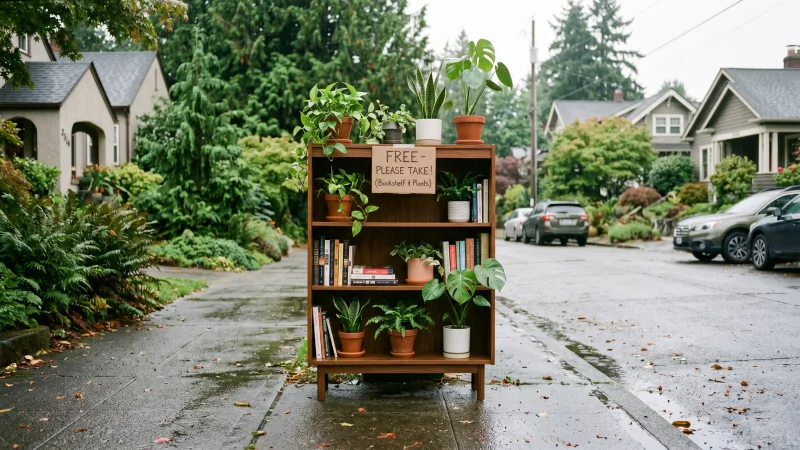
Last October I was walking my usual loop through the neighborhood when I spotted a fiddle-leaf fig on a curb, sitting in a plastic bucket with a hand-lettered sign: "FREE, NEEDS LOVE." It was nine degrees warmer than the forecast promised for that night. Not warm enough. That plant was going to freeze by morning, and I knew it, and so did whoever left it there.
Fall is the season of the great patio purge. People haul tender plants out of the garden, decide they don't have a sunny window, and set them on the sidewalk the week before first frost. If you grab one, it's often a real rescue, not just a free pot with some leaves in it. Here's how I go about it, including the parts I learned the hard way.
Judge the plant in ten seconds
You don't need to be a botanist. Squeeze a stem gently. It should feel firm, a little springy. If it's soft, bendy in a wet way, or the skin slides, walk away. Then tip the pot slightly and look at the base where the stems meet the soil. Mushy, dark, or smelling like a swamp means rot, and rot rarely turns around.
Next, flip a few leaves and look underneath. Fine webbing in the joints means spider mites. White cottony fuzz tucked into the leaf axils is mealybugs. A sticky film on the leaves, or tiny brown bumps you can scrape with a fingernail, points to scale. Any of those isn't an automatic no, but you should know you're signing up for a few weeks of treatment, and I'd skip it if the plant is already half bare.
Leaf loss, on the other hand, is forgivable. A plant that's dropped some lower leaves from stress but has firm stems and a healthy base is a fine bet. Brown crispy tips are cosmetic. I've revived plenty that looked terrible and passed every one of those squeeze tests.
Quarantine, even though you don't want to
This is the advice I ignore most often and regret most reliably. A new plant goes into its own room, or at least the far end of a different room, for two full weeks. Check it every few days. Pests hatch on their own schedule, and eggs you can't see on day one are crawling on day ten.
I know. You've got a shelf full of plants you love, and the rescue is gorgeous, and it would look perfect next to them. Resist. A single mealybug hitchhiker can wander across a windowsill in a week, and I've spent whole winters chasing them out of a healthy collection because I couldn't wait fourteen days.
Repot with fresh mix
Don't reuse the soil it came in. Curb soil is a mystery: it may be compacted into a brick, full of fungus gnat larvae, or home to the pests you couldn't see. Slide the plant out, shake or rinse most of the old mix off the roots, snip anything black or slimy, and repot into fresh potting mix. A bag runs about ten bucks and it's the cheapest insurance in this whole hobby.
Go up only one pot size, if at all. Big pot, small plant, wet soil that never dries: that's how you drown something that was surviving fine. And if it's a frost-tender thing you grabbed in cold weather, water lightly afterward and keep it out of any blasting heater vent for a while.
Scrub the pot, and yes, use bleach
Used terracotta is a treasure, and it's also a sponge. The chalky white crust on the outside is mineral salt, and the pores can hold onto fungus and pest eggs from the last occupant. Soak it in warm water and scrub hard with a stiff brush until the crust and gunk come off. A putty knife helps with the stubborn bits.
Then I do a rinse of about one part bleach to nine parts water, soaking the pot for ten minutes or so. It's a bit of a chore, and I used to think it was overkill, until a pot I skipped it on seeded gnats into a perfectly healthy plant. Rinse well afterward, let it dry fully in the sun, and wear gloves. Never mix bleach with anything else.
Which free pots are worth hauling home
Heavy glazed ceramic is the jackpot. If it takes two hands to lift, it'll outlast you. Check for a drainage hole, and run your thumb around the rim for hairline cracks. A crack in a terracotta pot isn't always fatal, but it'll probably split in a freeze, so only take cracked ones to use as decor.
Cracked, sun-brittle plastic is a pass. It shatters when you try to repot, and no amount of scrubbing fixes that. The exception is a clean, sturdy nursery pot, which is perfectly fine as a liner you drop inside something prettier. Big planters, wooden half-barrels and galvanized tubs are great finds too, but check the weight before you commit, because a planter full of wet soil is heavier than a couch. Get a friend, or a dolly.
One short reminder: lilies, pothos, philodendron, sago palms and a good number of other common houseplants are toxic to cats and dogs. If you've got pets, look up what you're bringing home before it goes on the floor.
The one that made it, and the one that didn't
That fiddle-leaf fig? I carried it home in my arms, bucket and all, with the leaves smacking me in the face the whole six blocks. The base was firm, the stems were solid, and half the leaves were curled and spotted from the cold. I quarantined it in the bathroom, repotted it into fresh mix, and cut off the dead stuff. For two months it did nothing. Then in January a single new leaf unfurled, bright green, about the size of my thumb. It's now taller than I am.
The other one was a beautiful, enormous jade plant in a glazed blue pot, and I was so thrilled about the pot that I barely looked at the plant. The stems were a little soft and I told myself it was fine. It wasn't. The base was rotting from the inside, and within three weeks the whole thing collapsed. I kept the pot, at least. It's got a snake plant in it now, and that one is thriving. I'd still tell you to squeeze the stems first.
If you want to see what's sitting on the sidewalks near you before the first hard freeze, check the map for plants and planters. Grab them early in the day, and if the forecast says frost, don't wait for the weekend.